WhatsApp Chat
Soil TestingSetup Guide

Road Materials Testing Laboratory Setup

A turnkey procurement guide and layout layout blueprint for establishing rigid and flexible pavement testing labs.
Road Materials Testing Laboratory Setup Cover Setup Diagram

What is it?

A road materials testing laboratory setup is a quality control facility equipped to test subgrade soils, mineral aggregates, and bituminous mixes for highway pavement construction. It certifies load stability and abrasion resistance.

A Road Materials Testing Laboratory analyzes subgrade soil, aggregates, and bituminous binders that constitute highway pavements. It focuses on load-bearing capacities, binder adhesion, drainage index values, and heavy wheel load durability simulations.

Why it is needed

Pavement materials must withstand extreme axle repetitions and weather cycles. Establishing a dedicated road materials lab ensures pavement layers prevent early rutting, fatigue cracking, and potholes.

Substandard road materials result in premature rutting, cracking, and pothole formation. Highway testing facilities ensure that the aggregates, sub-base layers, and wearing courses endure extreme weather and millions of commercial axle repetitions.

How to Setup & Test: Step-by-Step Workflow

01

Subgrade Compaction

Determine Optimum Moisture Content (OMC) and Maximum Dry Density (MDD) of the subgrade soil layer.

02

Aggregate Durability Audit

Subject aggregate samples to abrasion, impact, and crushing value testing to qualify structural soundness.

03

California Bearing Ratio (CBR) Test

Penetrate laboratory-compacted soil specimens to evaluate resistance against subgrade wheel deformation.

04

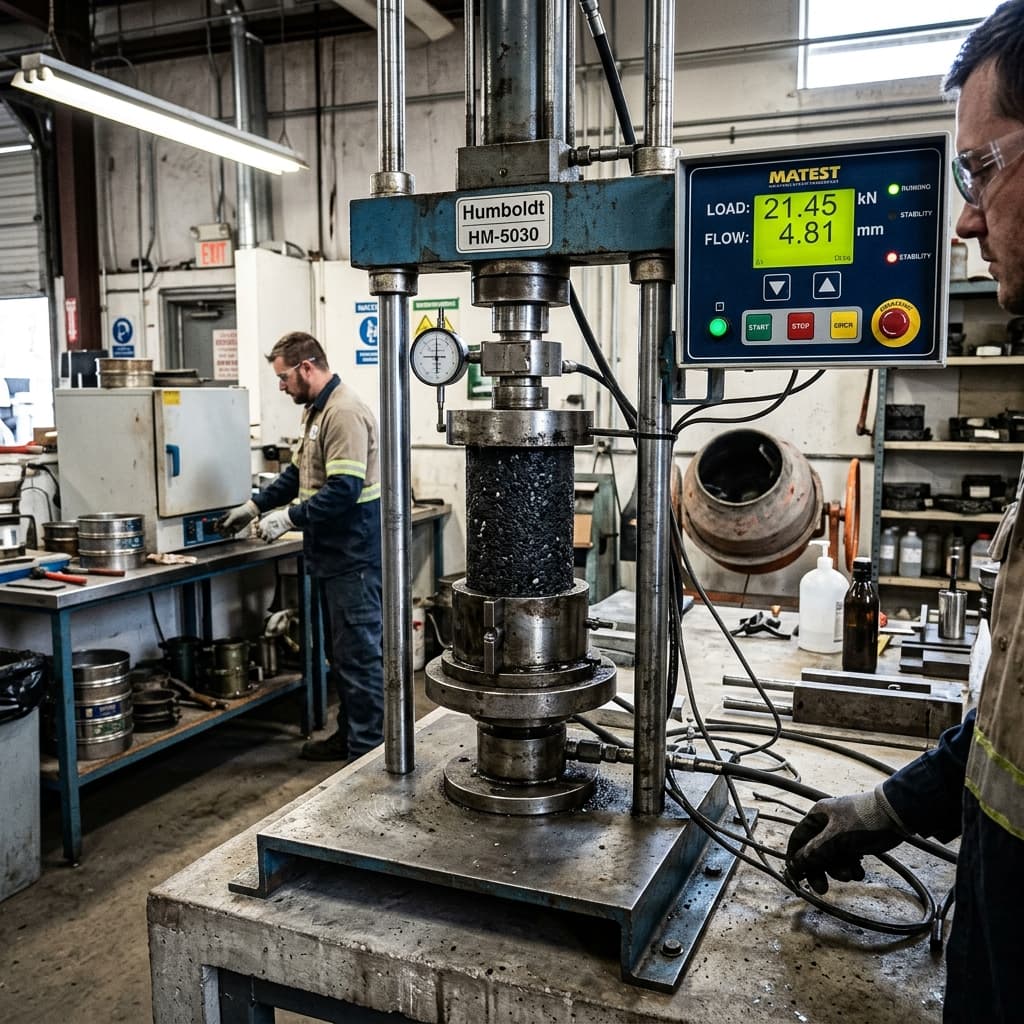
Marshall Asphalt Mix Design

Prepare asphalt molds at high temperatures, compact them, and test for stability and flow values.

Reference Standards

IS 2386
Methods of Test for Aggregates for Concrete
ASTM C131
Standard Test Method for Resistance to Degradation of Small-Size Coarse Aggregate
IRC 37
Guidelines for the Design of Flexible Pavements (Indian Roads Congress)

Maintenance & Common Mistakes

Avoid preparing asphalt specimens at temperatures below specified binder mixing ranges, as it limits compaction density.
Ensure CBR specimen soaking rings are aligned properly to prevent asymmetric water uptake.

Frequently Asked Questions

Q:What is the primary indicator of aggregate strength for roads?

The Los Angeles Abrasion value represents resistance to wear, with MoRTH specifying a maximum value of 30% for wearing courses.

Q:Why is CBR testing done for roads?

CBR (California Bearing Ratio) evaluates the subgrade soil load-bearing capacity to determine the required thickness of flexible pavement layers.