Bitumen & Asphalt Testing Laboratory Setup Guide
A structural design and instrument specification handbook for testing bitumen penetration, elasticity, and binder viscosity.
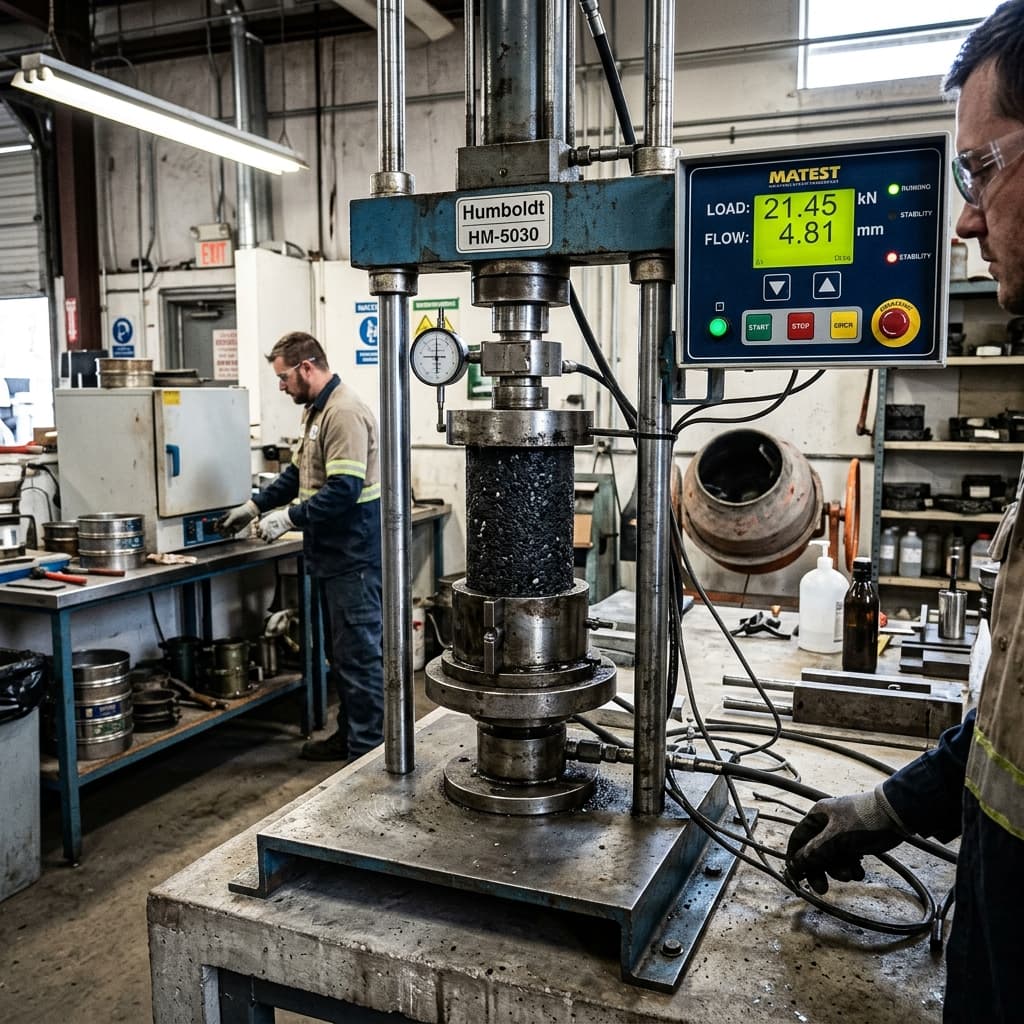
What is it?
A Bitumen and Asphalt Testing Laboratory evaluates bituminous binders (viscosity graded, modified) used in pavement structures. Testing focuses on binder consistency, rheology, safety flashpoints, ductility, and Marshall design parameters.
Why it is needed
Bitumen undergoes extreme thermal stresses. If it is too soft, pavements rut in summer; if too brittle, they crack in winter. Testing labs certify binder grades to guarantee performance across distinct climatic zones.
How to Setup & Test: Step-by-Step Workflow
Needle Penetration Test
Apply a standard 100g needle weight onto a bitumen sample for 5 seconds at 25°C to measure consistency in tenths of a millimeter.
Ring & Ball Softening Point
Heat bitumen discs holding steel balls in a water bath, record temperature when the sagging asphalt touches the lower plate.
Ductility Elasticity Pull
Pull a briquette of bitumen horizontally at 50mm/min in a water bath at 27°C until the thread snaps; record elongation length.
Binder Viscosity Measurement
Test efflux time using standard viscometers to classify viscosity grades (VG-10, VG-30, VG-40).
