Cement Testing Laboratory Setup
Bespoke lab setups and specifications for validating cement chemical soundness, hydration velocity, and mechanical strength.
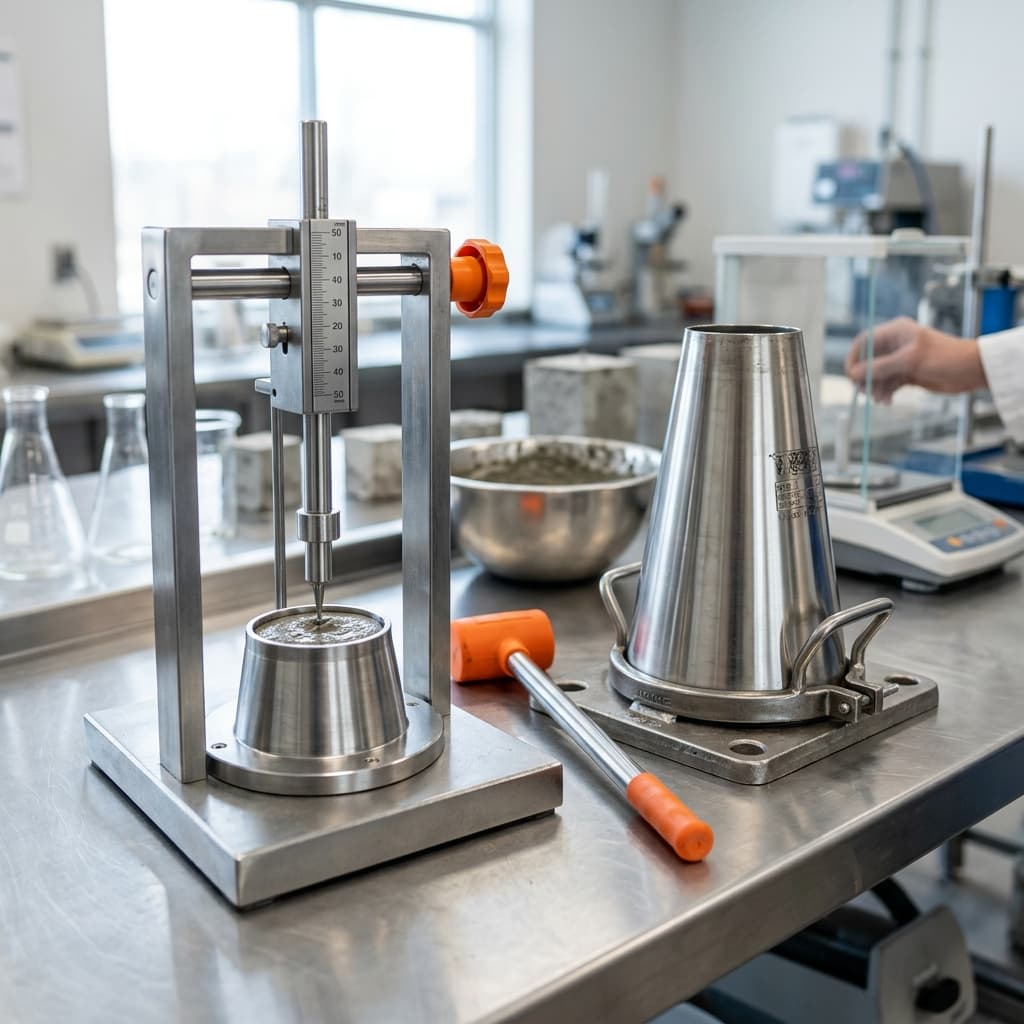
What is it?
A Cement Testing Laboratory evaluates the chemical, physical, and mechanical properties of cement. Essential tests determine fineness, initial and final setting times, heat of hydration, sound density, and compressive strength when blended with standard sand.
Why it is needed
Cement is the binder of modern concrete. If cement sets too quickly, concrete cannot be transported; if it has high free lime, it expands and cracks. Testing labs prevent structural failures in massive concrete construction projects.
How to Setup & Test: Step-by-Step Workflow
Fineness Verification
Use the Blaine air permeability apparatus to calculate specific surface area, defining rate of hydration.
Standard Consistency Mixing
Mix cement paste with varying water percentages until the Vicat plunger penetrates exactly 5-7mm from the mold bottom.
Setting Time Testing
Track penetration decay of Vicat needles to establish Initial Setting Time (IST) and Final Setting Time (FST).
Mortar Strength Validation
Cast 70.6mm mortar cubes using standard sand, cure them, and crush under compression frames at 3, 7, and 28 days.
